The Big Picture
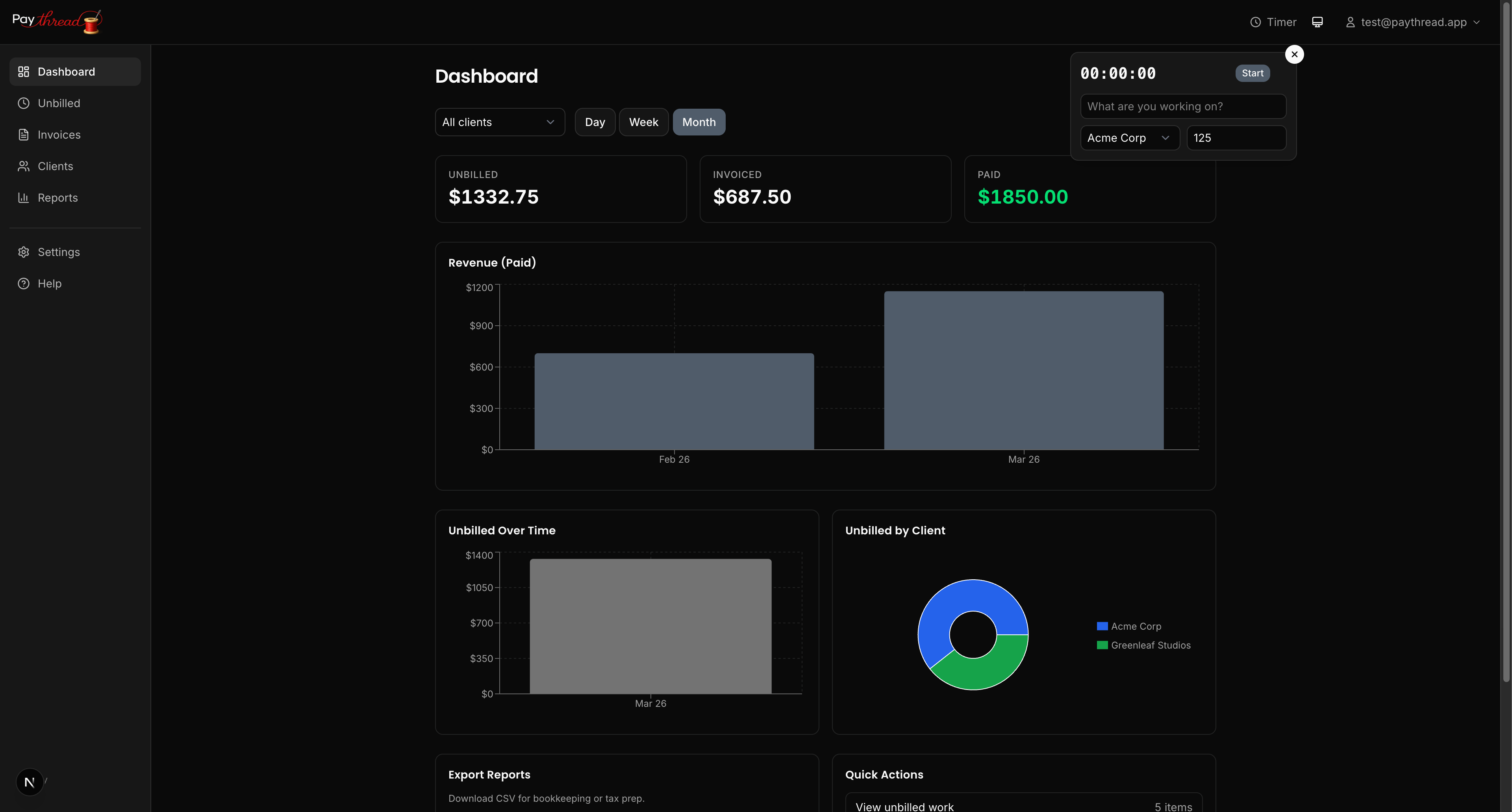
Paythread follows a straightforward flow: track your work, review it in the unbilled queue, then bundle it into an invoice. This guide takes you through each step so you can send your first invoice in about five minutes.
Step 1: Log Some Billable Work
Before you can invoice, you need at least one work item. Paythread gives you three ways to create them:
- Timer — Click the play button, do your work, and stop when you're done. The time is automatically calculated and priced at your hourly rate.
- Fixed rate — Add a one-off line item with a flat dollar amount. Great for project milestones, deliverables, or expenses.
- Multiplier — Set a quantity and a per-unit rate. Useful for things like "5 blog posts at $200 each" or "3 revisions at $75 each."
For this walkthrough, try adding a fixed rate item. Go to the unbilled queue, click Add Work Item, choose your client, give it a description like "Website design consultation," set a dollar amount, and save.
Step 2: Review Your Unbilled Queue
All work items — whether from the timer, fixed entries, or multiplier entries — flow into the Unbilled Queue. Think of it as your staging area before invoicing.
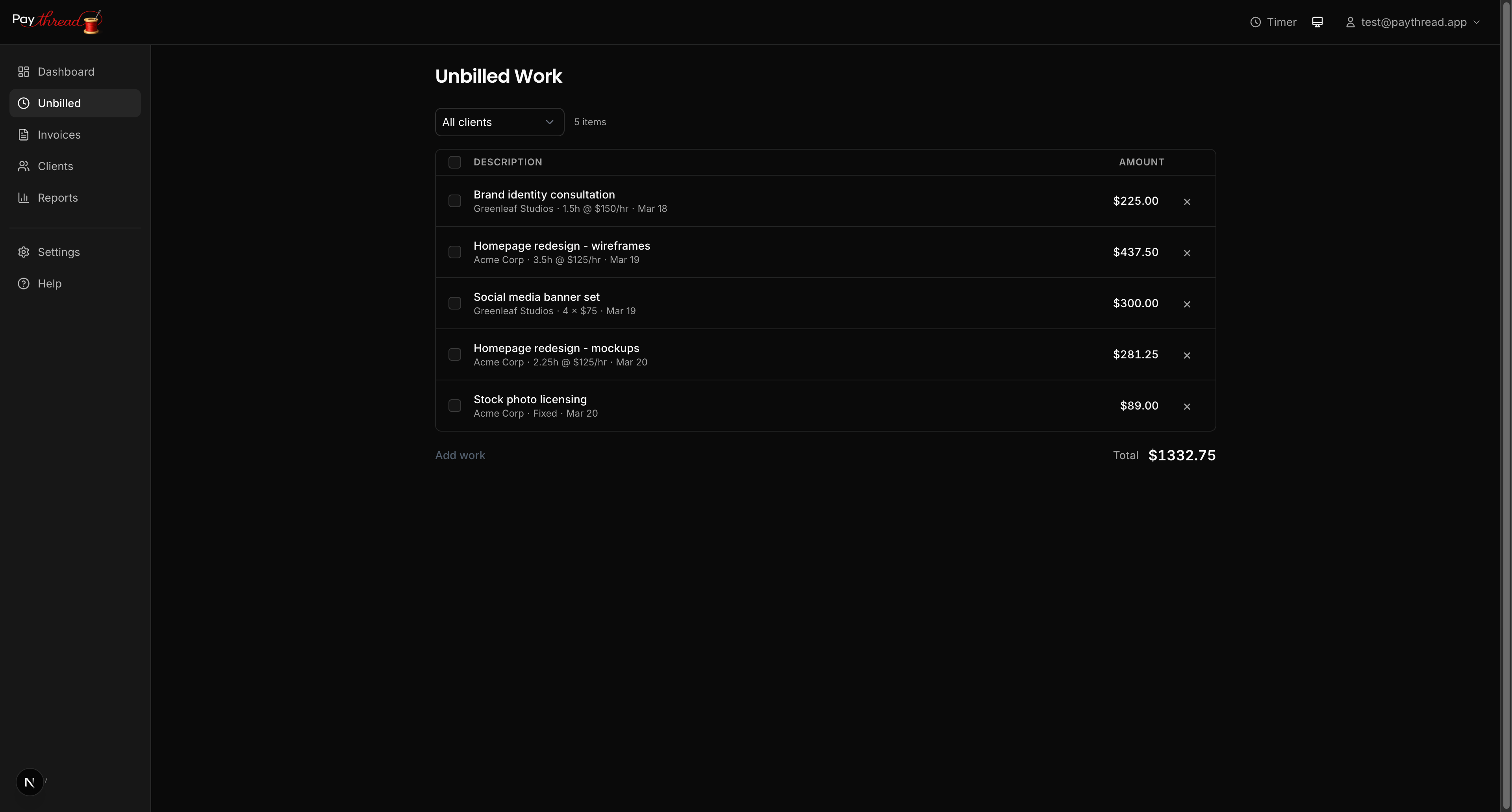
Here you can:
- Edit descriptions or amounts inline if something needs adjusting
- Filter by client to focus on one relationship at a time
- Select specific items to include on an invoice
Take a look at your items and make sure the descriptions are clear. Remember, your client will see these line items on the final invoice, so "misc work" is less helpful than "Homepage redesign — responsive layout updates."
Step 3: Create the Invoice
Select the work items you want to invoice by checking the boxes next to them, then click Create Invoice. Paythread bundles your selections into a new invoice and takes you to the invoice builder.
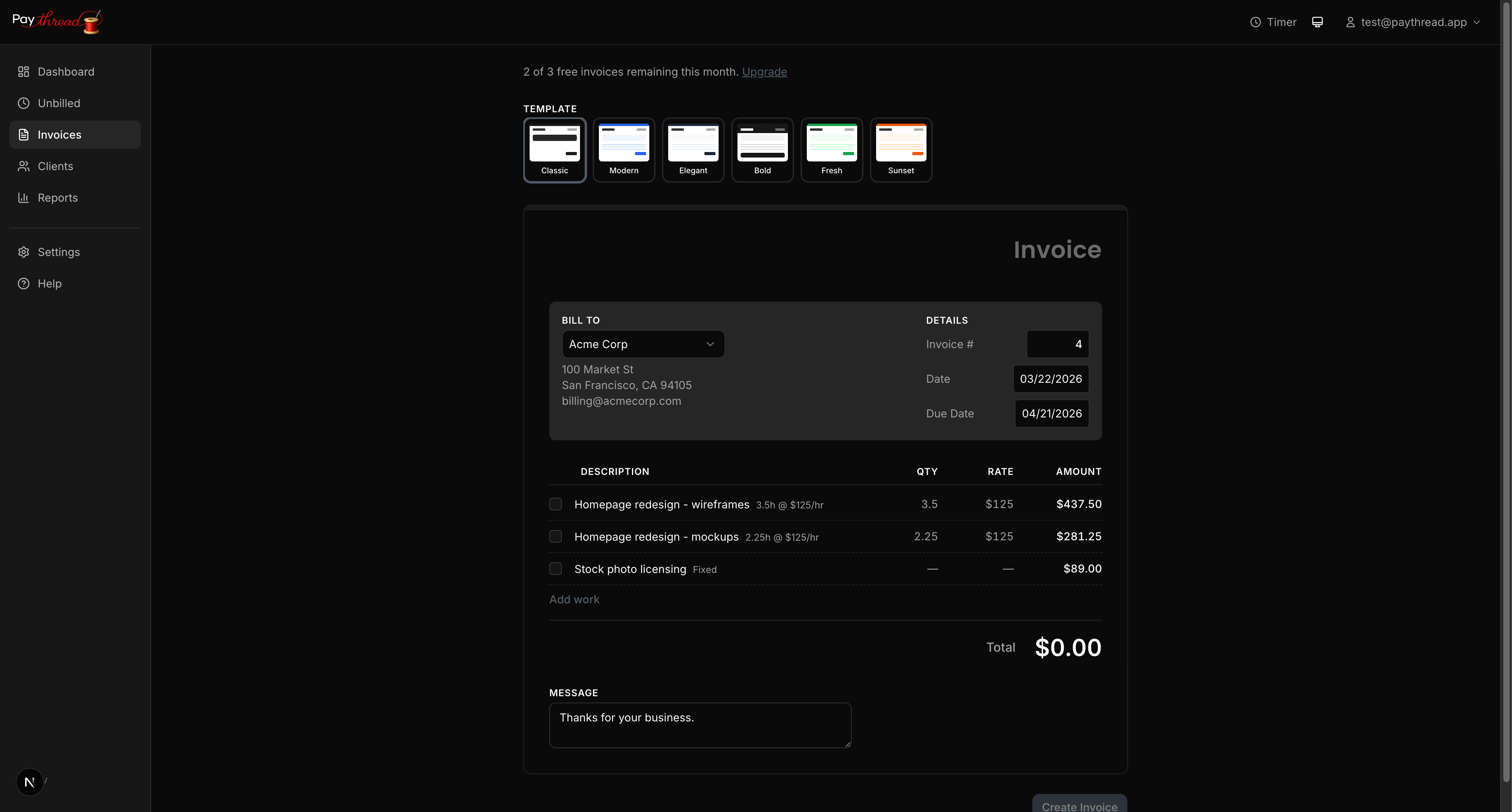
In the invoice builder, you'll see:
- Line items pulled from your selected work items, with descriptions and amounts
- Invoice total calculated automatically
- Due date which you can adjust
- Notes field for payment terms, thank-you messages, or any additional context
Review everything. Once it looks right, you have two options: download the invoice as a PDF to send manually, or send it directly through Paythread via email.
Step 4: Send It Off
Click Send Invoice and enter your client's email address (it will pre-fill if you've set one on the client record). Your client receives a clean, professional invoice with your branding, a breakdown of all line items, and a link to view it online.
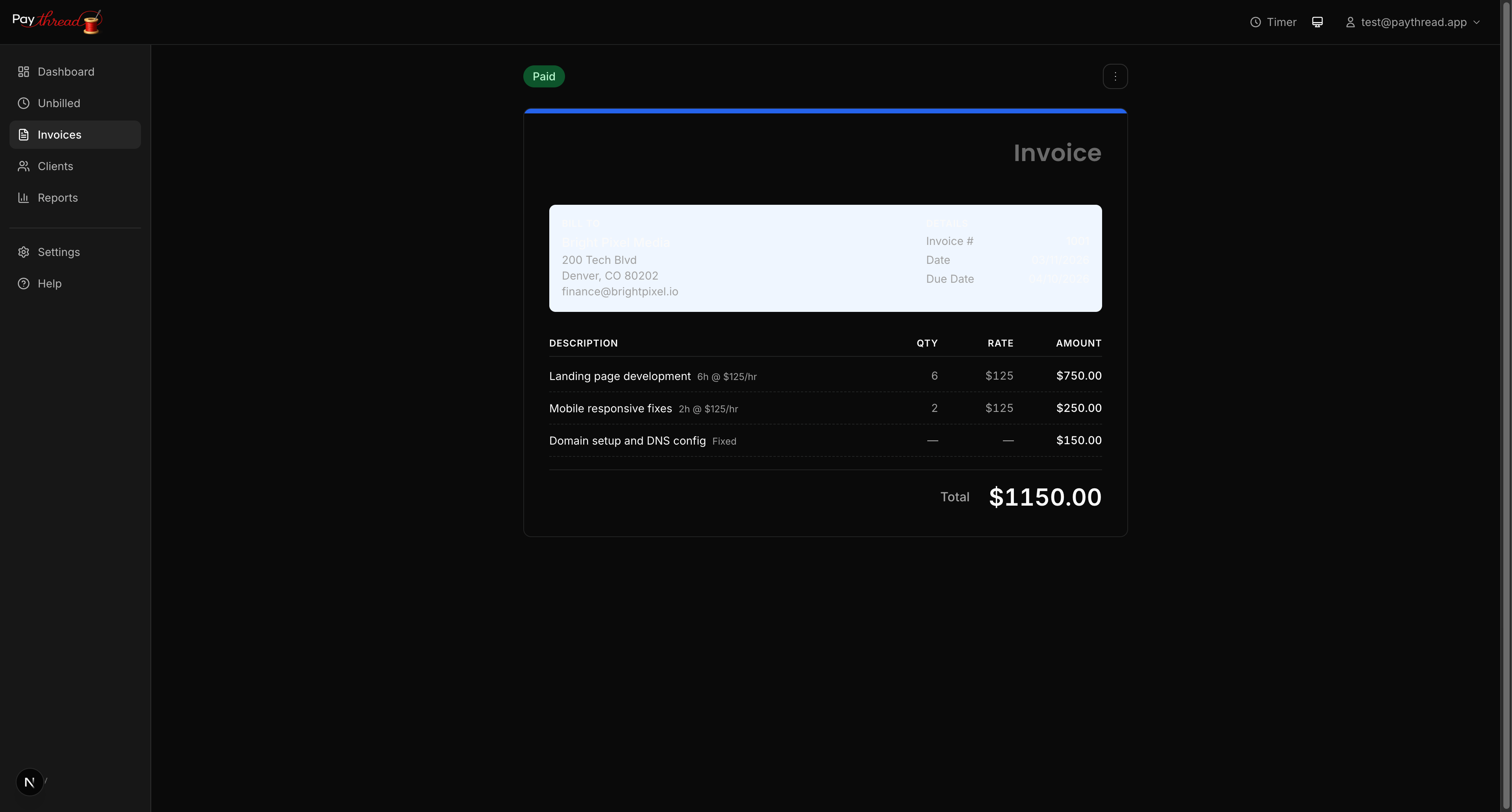
If you've connected Stripe, your client can pay the invoice online with a credit card. If not, the invoice displays your payment instructions and the client can mark it as paid when they send payment through other means.
What Happens to Invoiced Items?
Once work items are attached to an invoice, they leave the unbilled queue. You won't accidentally invoice them twice. If you void an invoice, the items return to the unbilled queue so you can re-invoice them.

What's Next?
Want to accept online payments? Set up Stripe in just a few minutes — see Setting Up Online Payments with Stripe. To learn more about the different work item types and when to use each, read 3 Ways to Track Billable Work.